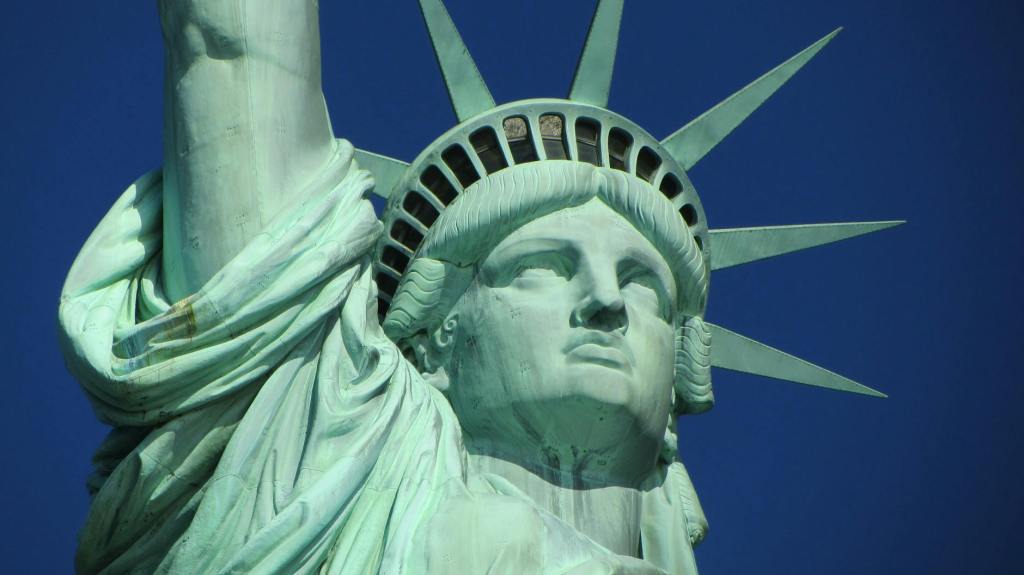
In Part 1 of this series, I talked about who immigrants are in a general way. I want to use Part 2 to talk about some immigrants I have personally known.
I have had the privilege to live abroad for over five years of my adult life—one year in France as an exchange teacher and four and one-half years in Berlin as part of the U.S. contingent occupying that city. I have become very familiar with the history of Europe leading up to, during, and after WWII. The events during the period 1930-1990 were characterized by the movement of millions of people immigrating. Much of that immigration was forced by the actions of Hitler and his Nazi Party during the Third Reich in Germany. Hitler and Stalin decided to invade and divide Poland between Germany and the USSR in 1939. In Western Poland, the Germans expelled the resident Poles in favor of the Germans already living there. Then The Nazi regime proceeded to repopulate the evacuated area with ethnic Germans. During WWII the Germans committed genocide against all Polish Jews (approximately 3 million people). At the same time they persecuted the remaining ethnic Poles (approximately 3 million more people) with a view to eradicating their culture and totally subjugating them.
I am specifically relating those events because my first husband and I became friends with a German married couple while we lived in Berlin. The husband, our friend Gerd, told us the hair-raising tale of what he and his mother went through at the end of the war. Their family had always lived in Silesia. That is one of those regions in Central Europe parts of which have belonged to and been passed back and forth among Germany, Poland and Czechoslovakia during their long history. At the end of the war, he was only sixteen years old, and he and his widowed mother had to flee from their destroyed city to get back to what was still considered to be Germany. In order to do this, they had to travel through much territory that had been reoccupied by the Poles whose army had invaded along with the Allies. Needless to say, Gerd and his mother were hated and scorned by many Poles just because they were Germans.
They had great difficulty finding lodging and food, and they were constantly afraid for their lives because of angry Poles bent on exacting revenge for the actions of the Nazis. It did not matter that Gerd had never worn a uniform or fought for the Nazis or that his mother was a widow whose life had been ruined by the war as surely as theirs had. As far as some formerly persecuted Poles were concerned, all Germans were Nazi vermin who should be eradicated. In recognition of the Poles’ humanity, I will tell you that Gerd and his mother were also helped by many compassionate Poles and eventually reached Germany.
I always think about that story when I hear about refugees coming to the United States. I wonder what hair-raising danger they had to endure to get to our country. I wonder what brush they have been painted with because of the country they have fled. Were they persecuted by their own government and forced to take part in and survive armed conflicts with which they did not agree? I feel so fortunate that I have never had to endure life in a country torn apart by a war the size of WWII.
My second husband Jim was a first-generation immigrant from Ireland. His father had lost his own father when he was a young teenager. The widowed mother had been so destitute that she had been forced to send two of her children (one of them Jim’s father) to live in a home run by the Christian Brothers. When the boys became adults, they immigrated to Boston. Jim’s father eventually settled down in the Washington, D.C. area. He married a local girl from Virginia. Jim’s mother was a waitress in a hotel restaurant, and his father was the bookkeeper in a private men’s club. Jim was their only child and was sent to Catholic schools from first grade through his post graduate education. He received his doctorate in physics from Catholic University. What a success story for that family, and what a gain for our country.
Jim and I owned and operated a vineyard and winery in New Mexico. New Mexico shares its southern border with Mexico. Not surprisingly there are lots of Mexican immigrants in the state. Those immigrants, both male and female, are hugely important for the state’s economy. The males predominantly work in agriculture and construction. Jim and I hired many immigrants to work in the vineyard. Our vineyard was in the desert at 4,500 feet, and the heat from the sun penetrating the thin atmosphere was brutal. The workers started at 6 a.m. and worked until 3 p.m. with only very short breaks during the entire shift. They set their own pace and work methods and divided into effective teams with no supervision from us. (It would have been hard for us to supervise them because we only spoke rudimentary Spanish.) The first time I saw how spontaneously and how hard those Mexican immigrants worked, I was impressed beyond words.
The problem was that we only needed workers occasionally. We were in competition for them with other employers who had full-time work available. One time we got a line on a group of Mexican workers who had full-time jobs with a local landscaper. Somehow he heard that we wanted “his employees” to work for us on the weekend. He told them that if they worked for us on the weekend, they could consider themselves fired. This competition was a threat to us because we had hired Anglos to work for us before. Those Anglo teams worked only half as hard if they worked at all. One time we hired a contractor to pour some concrete at our winery. The owner of that business told me that if it weren’t for his Mexican employees, he could not run his business. The White guys he hired often failed to show up. So you see, my experience with Mexican immigrant workers was positive. Those workers were a blessing to us, and our vineyard would not exist to this day if not for their hard, excellent work. I did not even mention the important role of the Mexican wives, some of whom hold housekeeping and caregiving jobs. They also are in high demand from New Mexico residents.
The stories in this part of my blog cause me to repeat what I said in Part 1. Rather than hate or oppose new immigrants, we need to help them to integrate into our melting pot. It is good for our country. Most importantly, it is our duty as one human being to another. Never forget, you and your family were once immigrants, too.
 A Piece of a Woman's Mind
Leave a comment