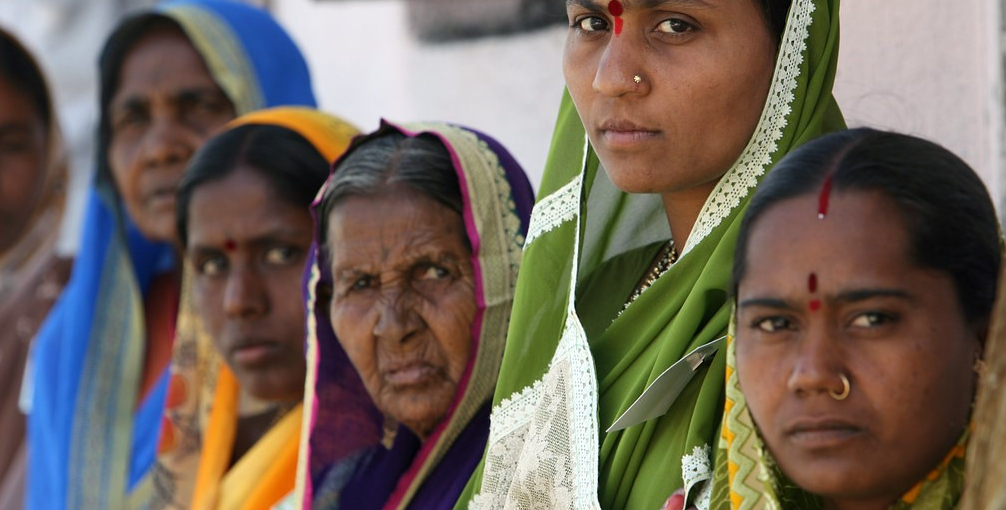
Over the past year I have read three stories in the New York Times about problems that women experience in other countries. These articles are so important that I would like to share them with you. It is proof that the problems faced by American women exist in other countries many times in an even worst way. For one article I have provided a link. The link may not work, but I have given enough information about the title, date and authors of the articles that you should be able to find all of them if you are interested.
Name of article: “An Algorithm Told Police She was Safe. Then Her Husband Killed Her.”
Authors: Adam Satariano and Roser Toll Pifarré
Date: July 18, 2024
The Spanish police use an algorithm called VioGén to interview victims of gender violence and generate a risk assessment about how likely the victim is to be attacked again. If there is a high risk, the police will give the victim extra protection. This article tells the chilling stories of several victims who received a “Low Risk” score and were later killed by their abuser. In the case of 32-year-old Lobna Hemid, the error in her score resulted in her husband stabbing her to death seven weeks after the assessment. He then committed suicide orphaning their four children. Although the algorithm has been helpful in predicting the risk of repeat gender violence and protecting some women, 8% of women judged negligible risk and 14% judged at low risk by VioGén were harmed again.
Governments are turning to algorithms to increase the effectivity of their policing of gender violence in light of a heavy workload caused by gender violence coupled with manpower restrictions. Furthermore, the article cites the case of Iowa City, Iowa that tested the Ontario Domestic Assault Risk Assessment (ODARA) developed and used in Canada. The officers who used the tool in Iowa City said it was helpful in understanding domestic violence better and helped them get better in performing risk assessments.
Domestic violence is an ugly fact across America. It is difficult to help some of the victims because they are deathly afraid of their abuser and fear the repercussions if they turn to the police or other outside helpers. In addition, if they have several children whose sole support is provided by the abuser, they feel trapped in their relationship. Even if the police try to intervene, the female victims often lie to the police because they are ashamed. In many cases the abuser convinces them that they are at fault. If domestic violence is a problem in your community and is not being taken care of, you might want to suggest the use of an algorithm and a special questionnaire to aid the police. In addition, if you are aware of someone who is a victim of domestic abuse, you can try to help the victim protect herself and ultimately remove herself from the abusive relationship. Unfortunately this is easier said than done.
It is very sad to me that this problem clearly exists for women in other countries.
*****
Name of article: “Young Chinese Women Are Defying the Communist Party.” This was a guest essay in the Opinion Section of the New York Times.
Author: Leta Hong Fincher
Date: November 26, 2023
If you follow Chinese politics and culture, you are aware that in the late 1970’s the government introduced a one-child policy that they vigorously enforced. This was a measure to reduce their burgeoning population. As so often happens with government policy in every country, there were unintended consequences. Because Chinese parents and grandparents wanted a male heir, many female fetuses were aborted. By 2020 there were 17.5 million more men than women in China. After years of plummeting birthrates, China has a shrinking population and an economic slowdown. The solution: in 2016 the government introduced a two-child policy, and in2021 they raised the limit to three children per couple. The only problem is that many young women in China aren’t interested in getting married or having children.
According to this informative essay, prevailing opinion in Chinese society is that a woman must get married before the age of 30 because by then she will have passed her peak childbearing years. Need I point out that this is the model of women as brood mares. Back to the essay, many young women intrepidly resist marrying until they have “aged out” at 30 so that their families and society will stop badgering them to get married. These brave young women are highly educated, have good careers, have their own means of support, and don’t want to settle for marrying a man they don’t love. They know that once married it is very difficult to get a divorce. Interestingly, some young Chinese men are also avoiding marriage.
Now the Chinese government is turning up the heat through subtle and not-so-subtle pressure and signals. For example, for the first time since 1997 there are no single women members in the ruling Politburo. The government is also making it harder to get vasectomies. It is not yet clear how far the government is willing to go to force women to the altar and the birth bed.
I lived in West Berlin, Germany from 1976-80. West Berlin was an island of freedom in the middle of East Germany which was part of the Communist-controlled Eastern Bloc aligned with the Soviet Union. The Russian occupation of East Germany was brutal because of the longstanding enmity between the Russians and the Germans. During that period East Germany’s population was falling. The government introduced all sorts of economic incentives to persuade East German couples to have more children. It is not unreasonable to think that people who are unhappy with their country and the prospects for its future would respond by refusing to bring more children into their world. This may be one factor in the plummeting birthrate in China.
On March 15, 2024 I wrote a post entitled “Womb Envy.” In that post I talked about how men in the United States are trying to get control of reproduction by forcing women back into the 1800s. If they can’t give birth, they’re going to try their hardest to dictate if and when we women give birth whether we like it or not. It didn’t work in China, and I don’t think it will work here. Sisters, resist, resist, resist and resist some more. I am so proud of our sisters in China.
*****
Name of article: “The Brutality of Sugar: Debt, Child Marriage and Hysterectomies.”
Authors: Megha Rajagopalan and Qadri Inzamam in collaboration with The Fuller Project.
Date: March 24, 2024
For me this is the saddest article of all. The State of Maharashtra in India is the location of sugarcane fields and associated manufacturing facilities. One of their chief customers is Coca-Cola. Sugarcane requires field hands to tend and harvest the crop. The best way for a man to work successfully in the fields is to take a wife who can help him and make his work more efficient. He is a piece worker who gets paid by the amount of bundles he delivers to the sugar mill. There are enabling agents who find wives for these men. The wives are usually child brides who are married off by their families who are too poor to care for them. These children are sold into forced labor so young that they never have a chance to get educated and realize any potential or dreams they might have.
These poverty-stricken man and wife teams need a stake to be able to support themselves in the fields. The same enablers working on behalf of the sugarcane owners loan money to the couple who will presumably be able to pay back the loan from their wages in the field. However, the wages are never enough to pay back the loan in one harvesting season. This means that the couples go deeper and deeper into debt to these enablers for the sugarcane field and sugar mill owners and must return to the sugarcane fields season after season to continue paying what they owe.
The young wives have their monthly periods with no sanitary supplies and no privacy to even use the bathroom much less take care of the blood from their flow. There are no running water, lavatories or restrooms at the work sites. Even when they get pregnant, the women must work until the child is born and then get back to work as soon as possible. Their children are in the fields with them and are often put to work as soon as they are able. Because monthly periods and pregnancy are such a hassle for these women, they are encouraged by doctors to get hysterectomies long before their menopause. There is no medical reason for these hysterectomies other than supposedly to free the women up to work harder and longer. These operations cause a lifetime of problems for the women especially if their ovaries are removed as well. The women physically age faster and some of them experience lots of recurring pain at the operative site. The upside that a hysterectomy is the most extreme form of birth control preventing the birth of more children the workers cannot afford is overwhelmed by the ravages and pain on the women’s minds and bodies.
In India child marriages are against the law. Forced labor is against the law. Child labor is against the law. The UN has declared that human beings should not be subjected to forced labor, and the UN is categorically against child labor. The state authorities are not enforcing the laws. When an outside authority points out that laws are being broken, the sugar mill owners and the State government officials point the finger at the enablers over whom they claim they have no control. The UN talks a good game but has no power to enforce its rules. As a result, the women and their children in the Maharashtra sugarcane fields exist in a living hell with no help in sight. Companies such as Coca-Cola also have corporate rules which forbid using vendors who use forced and child labor. The companies just never get around to performing audits of what is happening at their vendors’ sites.
Clearly the women who are victims of this sugarcane culture are in reality slaves imprisoned by a cruel forced labor system. They have their lives taken away from them when they are children too young to understand what is happening to them and too uneducated and powerless to object. These forced hysterectomies are reminiscent of the medical experiments performed by Nazi doctors on Jewish concentration camp prisoners. The difference is that the Nazis did it out of cruelty, whereas the Indian doctors do it to increase their earnings. They get reimbursed a lot more for an operation than a consultation about how to help a woman who is of childbearing age to cope with normal female problems such as the need for birth control pills in the sugarcane fields. The Indian doctors’ greed is equally cruel to that of the Nazi doctors. In both cases the “patients” are prisoners in one way or another with no power to stop the treatment.
You will note that The Fuller Project is listed as a collaborator on this article. I looked up this organization online (fullerproject.org). This is their mission statement: “The Fuller Project is the global newsroom dedicated to groundbreaking reporting that catalyzes positive change for women.” They provide articles such as the one I am reviewing to major news outlets such as the New York Times. Their website lists some impressive accomplishments as a result of bringing women’s issue to the fore. If I were Coca-Cola, I wouldn’t want my name in an article of this nature. I don’t know if they have made any change in their vendor relationship with the sugarcane miles in Maharashtra, India. I hope they have.
If you have found these articles enlightening, you may wish to check The Fuller Project website for more interesting articles about women and their worldwide plight.
 A Piece of a Woman's Mind
Leave a comment